
The truth doesn’t float to the surface. You must dive for it.
My foreword to "Titan Unfinished An Untold Story of Exploration, Innovation, and the OceanGate Tragedy" By Guillermo A. M. Söhnlein

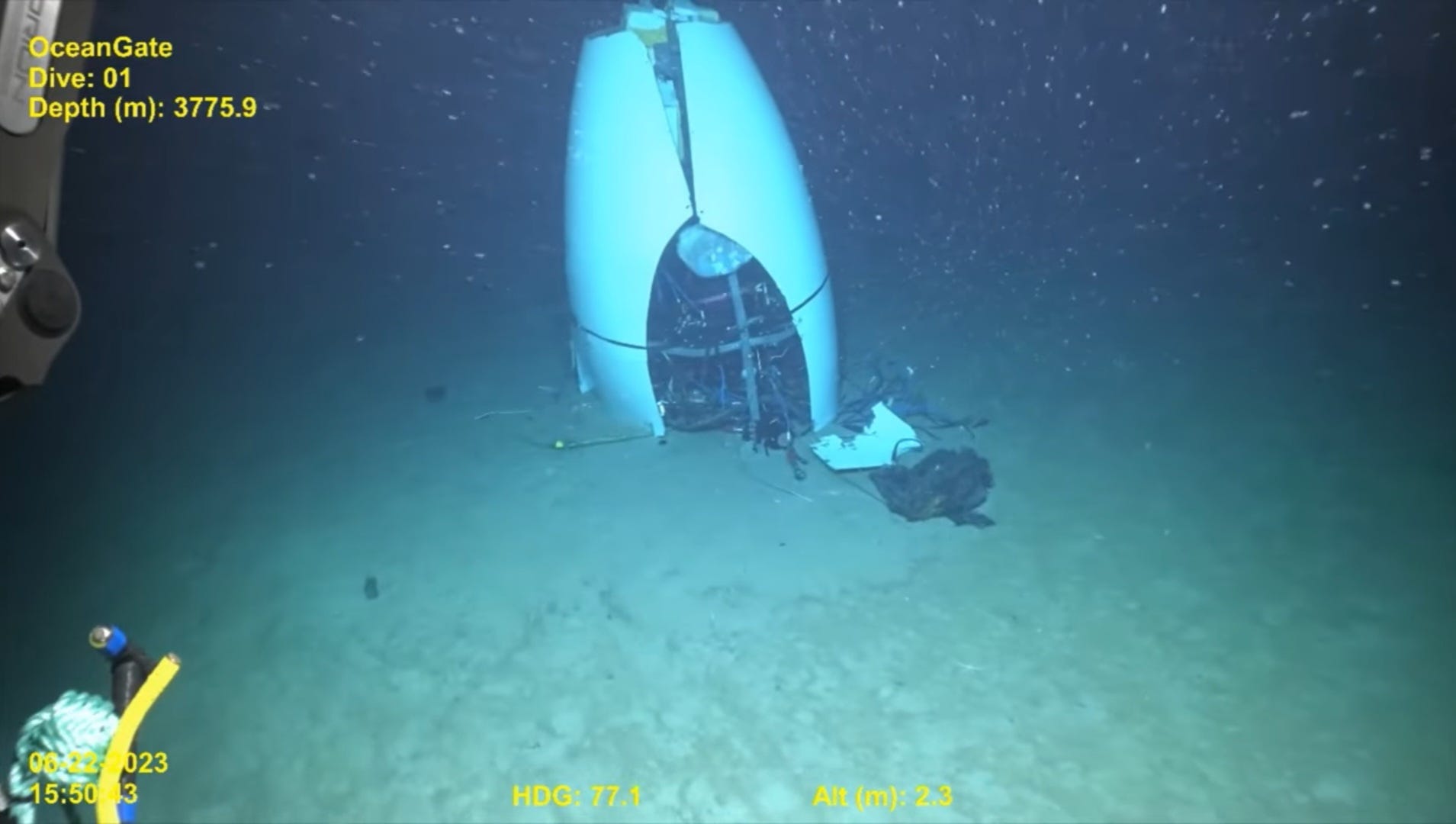
In June 2023, while the world was transfixed by the desperate search for the submersible Titan, I was far from the action—and deeply frustrated. Normally, I would have been on the air, helping audiences understand the nuances of science, technology, and the lure of pushing both to the ragged edge of possibility. But I was 13 time zones away—on assignment in Japan, at the site of another cautionary tale: the Fukushima Daiichi nuclear power plant.
The Japanese government was poised to release water tainted with radioactive tritium into the Pacific Ocean. The announcement triggered a blizzard of wild, inaccurate allegations on social media and in some corners of the legacy press. I was there with PBS News Hour, trying to sort fact from fiction—to interview scientific experts, tour the site, and produce an accurate account of the decision’s rationale and its real environmental impact. Here’s one of the stories we produced.
As I worked to cut through one swirl of misinformation, I watched another one spiral out of control in real time: the Titan story.
After long, hot days of filming wearing hazmat suits, respirators, and gloves to protect against radiation and contamination, I returned to my hotel and a steady, disheartening stream of fake news.
Social media and mainstream outlets alike elevated a fabricated transcript of the Titan crew’s “final moments”—a gripping but wholly invented account of panic, system failures, and desperate radio calls that never happened. Unverified underwater sounds—bangs, pings, imagined Morse code—were treated as life signs. Television networks aired countdown clocks as if the vessel was still intact and waiting to be rescued, even as experts privately suspected the sub had likely imploded shortly after contact was lost. One British tabloid splashed the headline “TRAPPED IN THE TITANIC TOMB” across its cover, reinforcing a grotesque fantasy.
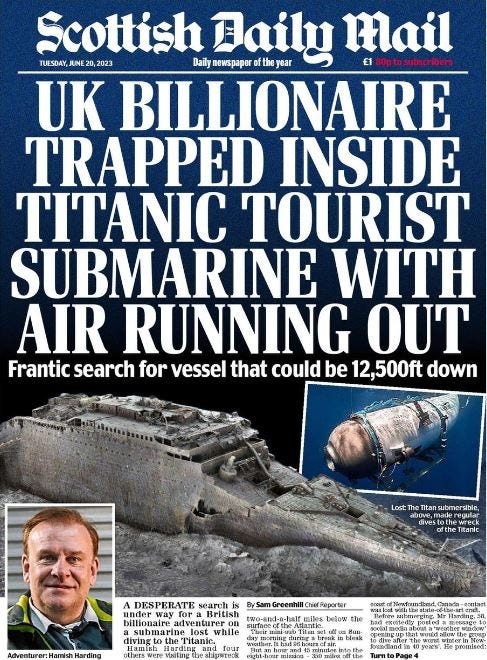
This reaction was not just about risk—it was about wealth and status. When tragedy befalls the rich or famous, it triggers a special kind of fascination, tinged with schadenfreude. In an era of extreme inequality, the suffering of the privileged is often recast as cosmic justice. Social media supercharges this: mockery spreads faster than compassion. The Titan passengers were quickly reduced to caricatures—tech bros, clueless billionaires, fools with too much money. Their humanity was stripped away in favor of a more clickable narrative. It was theater of the macabre, not journalism.
However, in the summer of 2023, journalism was on life support, and science journalism was on the brink of extinction.
For decades, the science beat was a vital part of the journalistic landscape. Reporters were encouraged to specialize, to develop fluency in fields like aerospace, climate, medicine, and engineering. But over the past 20 years, those roles have been slashed or dissolved entirely.
In 2008, CNN eliminated its robust, award-winning science unit, summarily dismissing seven science-savvy producers and reporters, and me.
Today, I am the last full-time science correspondent on U.S. network television, and fewer than 3% of American reporters and editors are dedicated to covering science. These aren’t just numbers; they represent the erosion of institutional knowledge, the hollowing out of specialization, and the rise of an era where the complex is oversimplified and the nuanced is overlooked.
Meanwhile, between 2008 and 2020, U.S. newsroom employment fell by 26%, with journalism jobs dropping a staggering 57%. As newsrooms shrink and deadlines accelerate, the generalists who remain are stretched thin, and highly technical stories—like the Titan implosion—are viewed as real-life drama made for ratings and clicks.
But there was another factor at play here. OceanGate, the company behind Titan, offered no public statement in the crucial days after contact was lost. No spokesperson stepped up. No one provided context or credibility. Nature abhors a vacuum, and into that void rushed speculation. The CEO and pilot, Stockton Rush, was cast as a reckless thrill-seeker. The passengers were mocked as clueless billionaires. The vessel’s carbon-fiber hull became a symbol of hubris.
There are elements of truth in all of that. But the real story is more complicated.
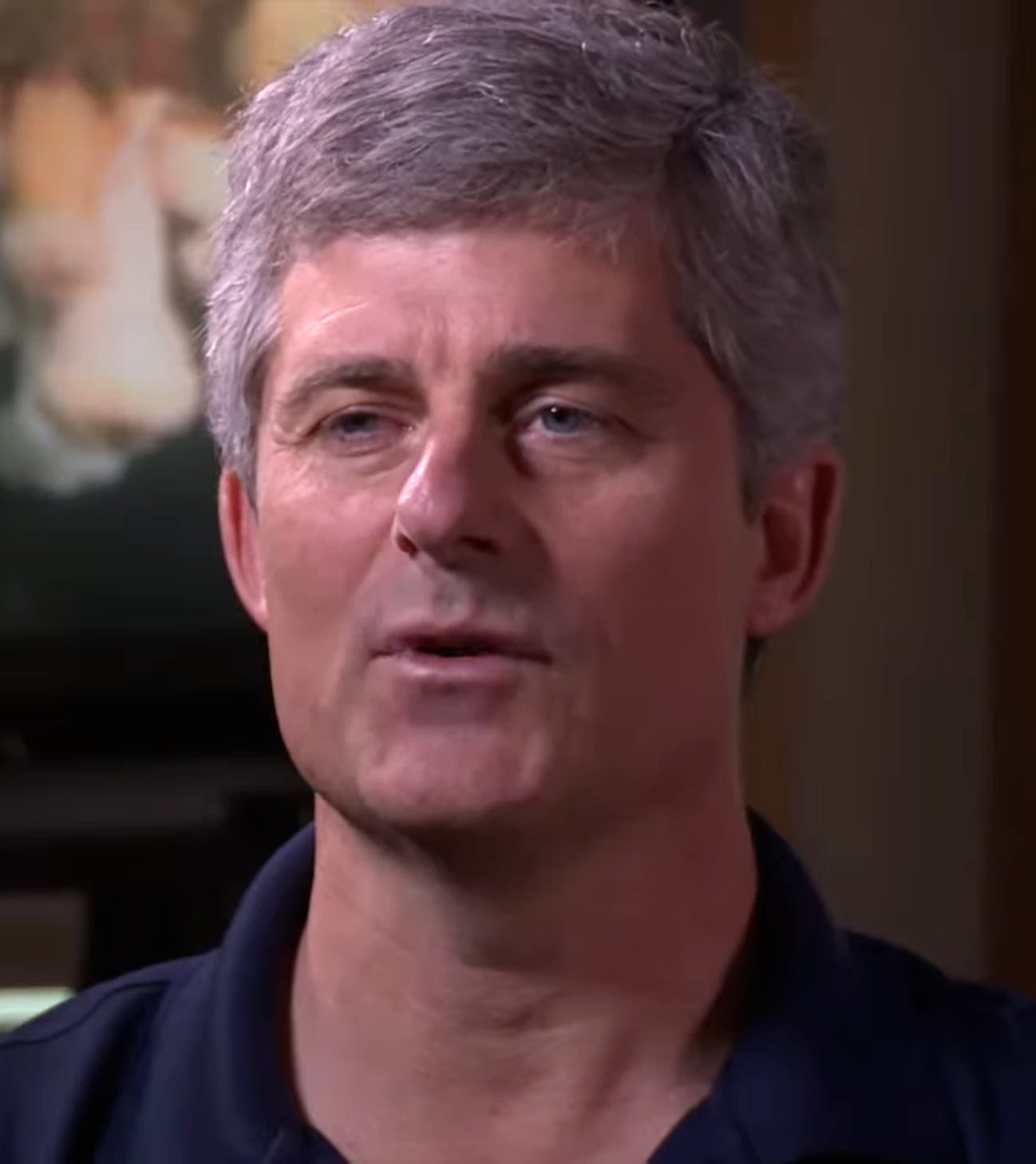
I first met Stockton Rush in 2010, when I accepted his invitation to dive in Antipodes, a submersible that OceanGate had purchased and modified, to learn the ropes of undersea exploration. The dive took place in Puget Sound. The water clarity there is not great, so we didn’t see much, but I saw enough to know this: Stockton wasn’t a trust-funded dilettante. He was curious, driven, and sincerely motivated to open access to the deep ocean. He wasn’t building toys. He was building tools for scientists, educators, and yes, even journalists like me. He wanted to democratize deep-sea exploration, and as he piloted Antipodes, he appeared to know exactly what he was doing.

My invitation was facilitated by OceanGate co-founder Guillermo Söhnlein, whom I had met six years earlier, in 2004. At the time, Guillermo was running the International Association of Space Entrepreneurs. He was drawn to exploration and entrepreneurship, but what struck me was his mindset: methodical, systems-oriented, linear in his thinking. He wasn’t just chasing dreams—he was building the foundation of a nascent industry. Reading this book only reinforces my impression that Guillermo was exactly the kind of partner Stockton needed to help OceanGate push the envelope, without tearing it.
I can’t help but wonder how things might have transpired if he had remained at the helm. Maybe the tragedy could have been avoided. But even if it wasn’t, I’m certain the story would have been told differently. Guillermo would have stepped up. He would have communicated. He would have filled the vacuum with facts, rather than leaving it to be filled with fiction.
As I often tell people, the demand for facts is inversely proportional to their availability. It does indeed take time for the real story to emerge from a maelstrom of tragedy. However, our attention spans often don’t match that timeframe, unfortunately.
This book, Titan Unfinished, is a valuable attempt to pull the signal from the noise. Guillermo Söhnlein writes not as an outsider, but as someone who helped build the company. He offers context, perspective, and a refusal to indulge in easy answers. He doesn’t excuse every decision, but he resists the impulse to oversimplify.
The truth doesn’t float to the surface. You must dive for it. And we should never consider that mission finished either.
My conversation with Guillermo is in my latest episode of Miles Ahead.
As always, great insight, Miles! Thank you! Not just on OceanGate. Your numbers on science reporting are sobering indeed! Clearly the answer is we need to clone you so we can have more Miles in more places!
Timely concepts, Miles. Being a journalist today is hard; being a science journalist today is even harder. Thank you for being there for us.